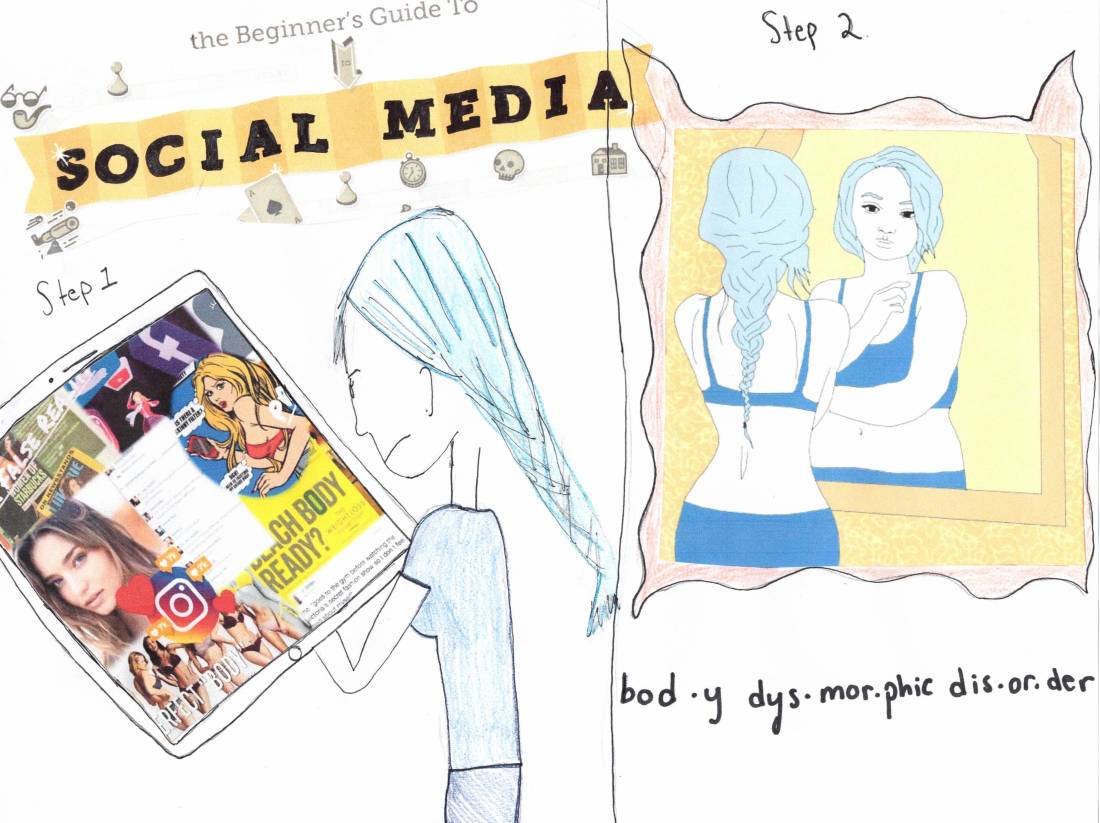
- Teyah Fasheh and Hannah Walsh
Exploring Root Causes and Strategies for Social Change
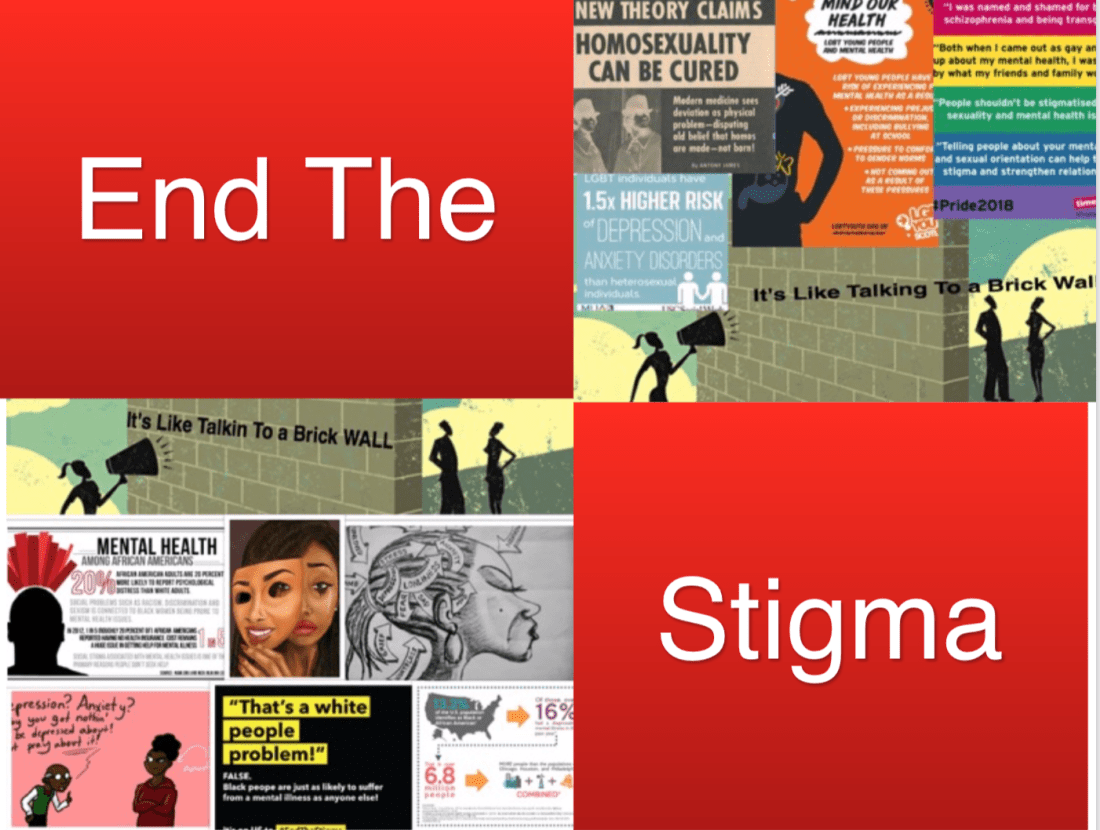
What are we not talking about?
How come mental illness is so taboo in certain communities?
Can the suppression of these disorders worsen the illness?
How can we begin the discussion?
– Illustration by Emily and Jada
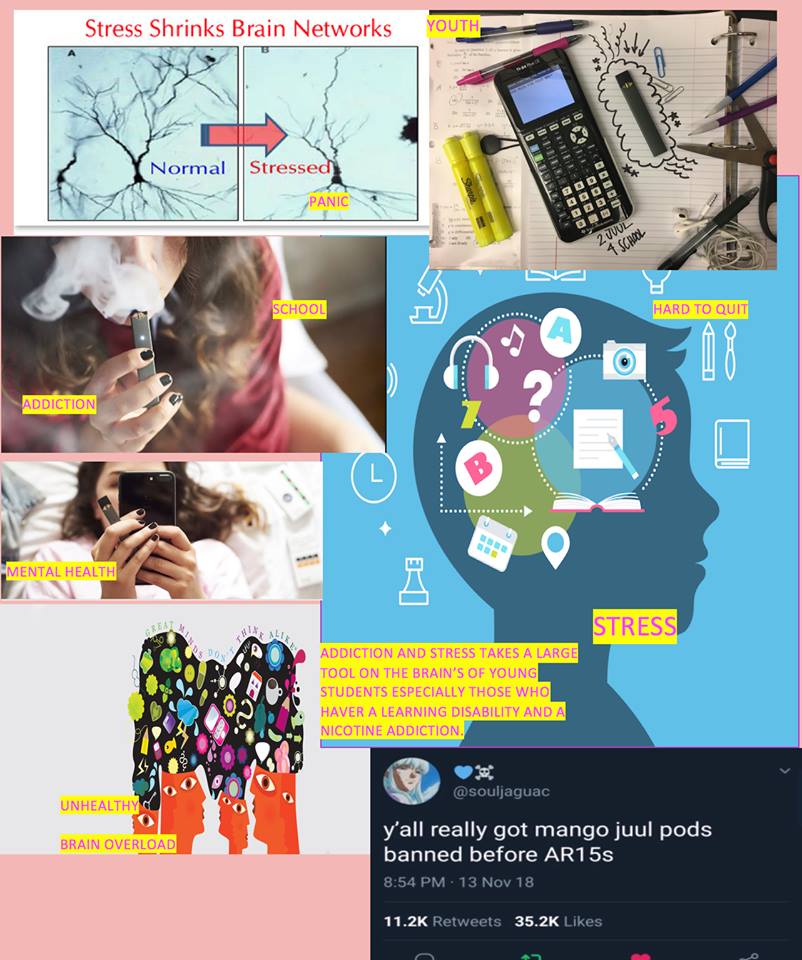
“Restrictions being placed on Juul are faster than gun control.”
“A juul in your hand is equivalent to having an iPhone.”
“Abled does not mean enabled. Disabled does not mean less abled.”
“You don’t improve education by demoralizing the people that have ton do the work every day”
-Samantha Lassman & Uriel Tyler
Cancer. Car accidents. Heart attacks. Suicide. What do all of these afflictions have in common? They’re the leading causes of death in the US, however, only one is on the rise. Suicide, now three times as common as murder, has risen steadily in almost every state since 1999 and by 25% nationally . Of this rising rate, nearly 50% of the US population will suffer a mental health disorder at some point. Even worse, these numbers are affecting us younger and younger.
Representing just one staggering statistic of many others, the issue of suicide is quickly becoming a national epidemic that’s indoctrinating victims at increasingly younger ages. Bluntly put, youth mental health is worsening as well. The average age of those experiencing onset depression has lowered steadily from 29.5 years old to the current age of 14, meaning it has lowered every year, by a year, for over a decade. Now, kids only half the age of their parents, are experiencing the same pressure and emotional distress that fully grown adults have a hard time handling. Additionally, the percentage of American children experiencing not just a bout of depression, but a lifetime, of depression and anxiety issues has risen over 3%, to 8.4 in less than 10 years.
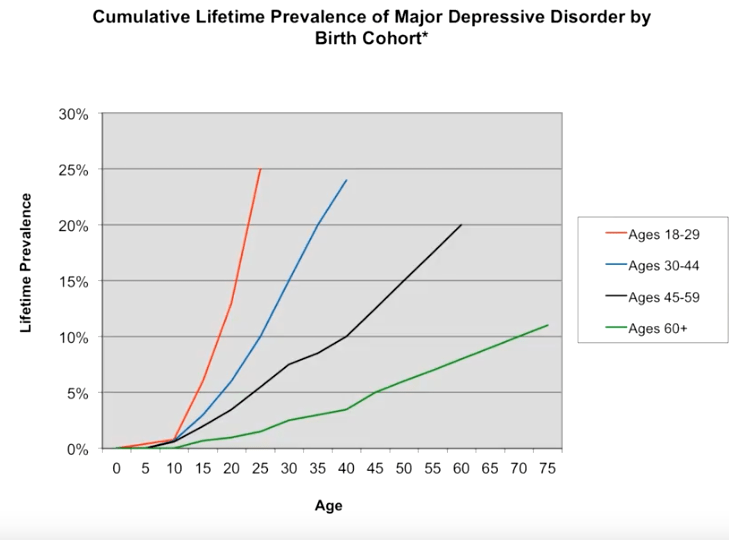
All of these statistics are reiterations of the same fact, the problem, of youth mental health and the treatment of this issue across America, is only growing worse. Every generation for the past decade has lowered the age at which we begin experiencing mental health issues, while also increasing the longevity and duration of its stay among us. What could explain this? Why now? Why are we becoming more and more miserable by the day? Why is suicide projected to become one of the leading causes of death in our country? While there is no simple answer, there can be a root cause – society itself. Our shared societal experience is the common factor that connects all statistical dots. However, this issue of increasing depression among youth and climbing suicide rates is still being treated and made into an individual biological problem, a personal chemical imbalance, rather than as what is the very real presence of what is socially caused depression.
There is more than just one type of depression, not just a chemical, serotonin imbalance, but rather a symptom of society. A society that “erodes communities and isolates people, which [ours] does in major ways”, is going to breed insanity. This presence of structurally caused, societal depression is supported by the fact that more than half of those who commit suicide didn’t have any ‘known’ mental health conditions, instead “had other problems – loss of relationship, financial setbacks, eviction, job loss”, etc… A fact largely supported by the fact that suicide rates climb to new heights at societal lows. During the Great Depression for example, the rate was 22 and according to the most recent CDC data, the current rate has climbed to 15.4 this past year alone. Therefore it can’t just be a chemical imbalance making us all genetically born more depressed- evolution just isn’t fast enough to account for this and the numbers are far too high.
Instead, it is largely due to the fact that modern society has failed our most basic human needs. We are “disengaged from our jobs and our schooling”. The high prevalence of youth mental health issues is allotted to the increasing pressure placed on them, like amassing loan debt and acquiring the credentials just to get a job for which they have no enthusiasm. This pressure combined with the disengagement of the collective has created an increasing amount of people socially isolated from one another.
Society’s impact on structurally breeding these issues doesn’t stop at the pain of debt or schooling, the aforementioned pain of isolation is the worst effect of all. The American Sociological Review published a 2006 study, “Social Isolation in America”, which found that the percentage of Americans with a personal confidant in their lives had decreased by 15% over the course of the decade. Psychologists and social anthropologists alike have attributed these effects to our societal institutions that are lacking the very basic principles that we, as humans and as a society, need to survive as social creatures.
Our societal institutions lack enthusiasm, community, trust, empowerment, autonomy, participatory democracy, diversity, and stimulation (just to name a few). Instead, society is left not “humanly interesting” and out of this, can only produce a “mass man”, who is incapable of self-directed activities and disciplined to “monotonous work”. A mass man representing entire generations of youth and those before us, conditioned to be miserable in the shackles of our uninteresting societal constraints.
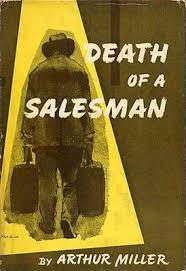
We’re constrained by social stress and lack of community stemming from a society that teaches us our core values are money and status, all under the guise of innovation and progress. Industrial and modern development under the capitalist system has created a society driven by the production and consumption of material goods. In order to adapt, our core values have shifted to rely on materialistic standards of wealth and status, which even when achieved, is never as rewarding as we expect it to be. We’re left destined to feel like failures and ‘Willy Lomans’ as we strive to “make it” only to realize we’ve missed out on the real pot of gold life had to offer (see meaningful relationships, rewarding work, and personal integrity). In a society that stresses more is never enough and production of value can never stop, there’s no way for us not to burn out. We then willingly lose our communities and stable personal lives on our current road to success, conditioned to become unaware of what we’re missing, even when we can feel that we’re missing it.
The few attempts made so far to address this underrated issue have only placated, instead of addressed, the root cause. Societal depression and the epidemic we face today can’t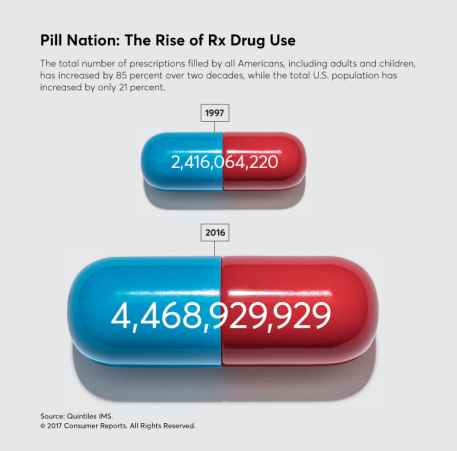 be fixed with medicine and prescriptions alone. In fact, while medication use has gone up exponentially (300% in the past 20 years alone), the rate of depression has directly gone up just as well. We haven’t solved, or even made a dent in the issue with this approach. These depressing numbers, word choice intended, can’t go on.
While it seems insurmountable to tackle the issue of society that’s eroding us from the inside out, all is not lost. Social justice activists and advocacy groups have already begun the work of enacting change. The future solution can take many forms, from community healing to policy change, strides are being taken. However, the road to a healthier youth and participatory democracy can only come once the root causes have been addressed and accepted by those plagued by it.
– Teyah Fasheh
 Mental Health and Addictions