Black mental health has notoriously been denigrated through stigmas, institutions, and public opinion. “The stigma surrounding mental illness in the black community is heavy. Black people feel as though choosing to seek professional help, such as a therapist, is a sign of weakness.” Denial, shame and lack of acknowledgement has been a mechanism used outside and inside the black community when acknowledging mental issues. Furthermore, a whitewashed view of what mental health means has been the rhetoric used to imagining treatment and consequently disparities only grow.
Too often trauma is constructed in a more privileged context. Benjamin and Carolissen explores narratives of community-based counselors in low-income areas. An analysis is offered reconceptualizing trauma in relation to inequality and ongoing adversity. The authors acknowledge that without understanding the past we will continue to recreate cycles of violence and perpetuate transgenerational trauma. Understanding that adaptive responses, structural and longterm effects play a role in perpetuating cycles of violence and trauma is essential to understanding trauma is this context. Disconnection and detachment of the individual occurs when cumulative experiences of trauma lead to a strategy of survival consequently, leading to social isolation and marginalization.

Mental Health America discusses the many issues African Americans face with mental health in regards to demographics/social issues, prevalence, attitudes, treatment issues, and access/insurance. Educational materials and resources to raise further awareness about mental health are offered and focus on outreach to African American communities. Statistics that suggest 45.7 million people of the U.S. population identify as Black or African American, 6.8 million of those people has had a diagnosable mental illness in the past year. However, not may of them received adequate treatment.
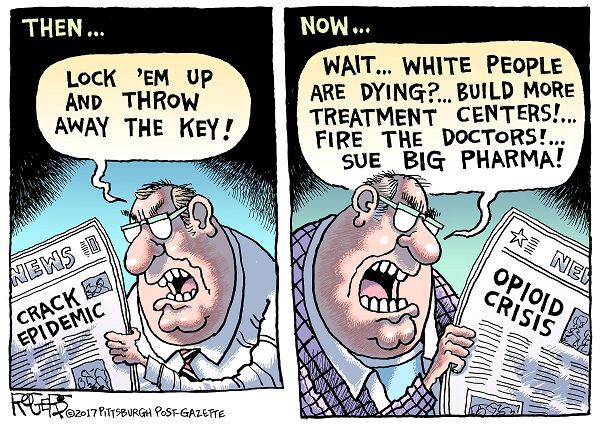
An examination of the opioid crisis and racially disparate drug policies is offered by Hansen & Netherlands. The author believes that unless existing disparities are addressed medically assisted treatment will only exacerbate inequalities. Racially stratified responses that led to penalties and criminalization for people of color but expansion of access to addiction treatment to white individuals. We see this displayed through. The War on Drugs in 1971, which was created to criminalize blackness and was really a war on poverty. Drug dealers were painted as super predators and the sole reasons for failure in neighborhoods and inner cities. Cocaine was considered to be the drug of wealthy whites. While crack was the drug of choice for poor people and was heavily criminalized. The war on drugs contributed to mass incarceration rates as blacks were given mandatory sentences and continuously disenfranchised. The war may have ended but the law and order policy, images and assumptions made during this time still existed and resulted in a genocidal effect in the black community. The laws implemented and racial disparities carried out with the three-strike and welfare policies during this time strengthened the new racial caste system and mass incarceration rates. A vital part of strengthening the war on drugs and mass incarceration rates was the allowance and operation of police with little to no oversight.
Through narratives, statistics and policies we see the ways in which historically, communities of color have experienced unique and substantial challenges in accessing mental health services. Adequate response to addiction and trauma in the black communities has also been negated. Moving forward these platforms offer solutions such as fundamental transformation of the system that acknowledges trauma in context to one’s environment. Educational outreach is also at the forefront of a root solution outlined in these articles and acknowledging existing disparities is essential to moving forward with mental health and addiction in black communities.
J.H

 Mental Health and Addictions